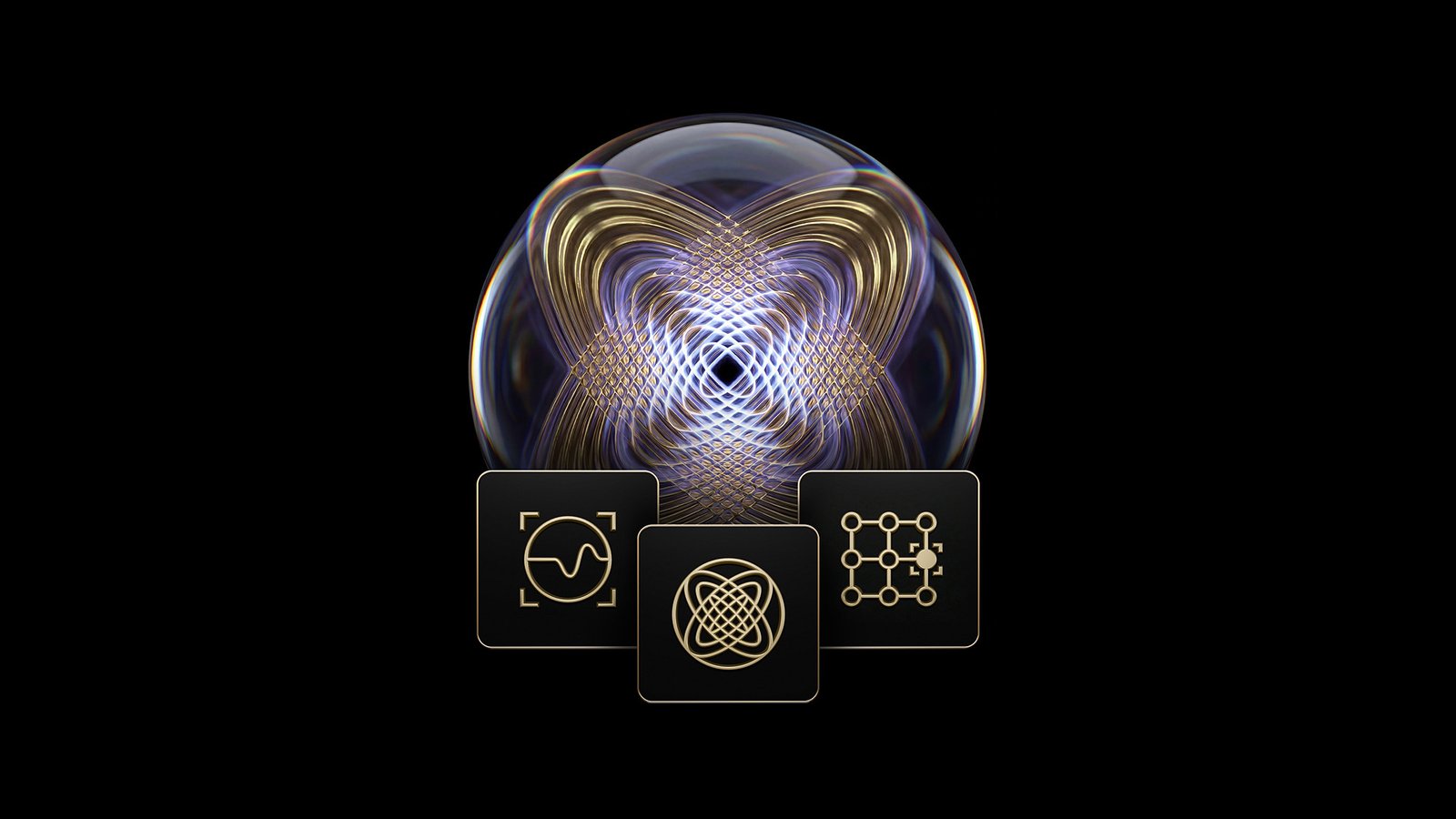
NVIDIA has taken a fresh step into quantum computing with the launch of its new open-source AI model family, Ising, announced on World Quantum Day.
At a time when quantum technology is still struggling to move beyond experimental stages, the company is positioning AI as a practical way to push the field forward.

The Ising family includes two models—Calibration and Decoding—each targeting core bottlenecks in quantum systems. Calibration focuses on simplifying the complex process of tuning quantum processors. By using a vision-language model to interpret system data, it can shrink calibration timelines from days to just a few hours, making the process far less resource-intensive.
Decoding, meanwhile, is built to tackle quantum error correction. It uses neural networks to process large streams of data in real time, helping improve both speed and accuracy. When combined with existing decoding systems, it enhances overall performance without requiring a complete overhaul.
During a media interaction, Sam Stanwyck pointed out that the biggest hurdle in quantum computing today remains “noisy” qubits. This noise reduces reliability and makes scaling difficult. He explained that AI models like Ising can step in as a control layer, helping manage this instability more effectively.

According to the company, early results show up to 2.5 times faster performance and nearly three times better decoding accuracy compared to traditional approaches.
Jensen Huang also underlined the broader vision, saying AI will play a central role in making quantum systems usable. He described it as a kind of operating layer that can bring structure and stability to otherwise fragile quantum machines.
The company also made it clear that access to physical quantum hardware is not a barrier. Developers can use NVIDIA’s simulation tools to work on both noisy and ideal quantum environments. This opens the door for researchers and startups, especially in emerging ecosystems like India, to experiment and build without waiting for infrastructure.
A growing list of organizations has already started exploring these models, including Atom Computing, IonQ, IQM Quantum Computers, Fermi National Accelerator Laboratory, and Cornell University.
Ising is designed to work within NVIDIA’s existing quantum stack, including CUDA-Q and NVQLink, adding an AI-driven layer for better system coordination and control.
While the models are already showing promising results, the company has not committed to a specific timeline for widespread real-world deployment. Still, the effort aligns with ongoing work by major players like Google, IBM, and Microsoft.
NVIDIA believes the quantum computing market could grow beyond $11 billion by 2030, but only if challenges like error correction and scalability are addressed.
To speed up adoption, the company is releasing Ising as open-source, allowing developers to tweak and adapt the models for their own systems. Supporting tools such as training datasets, workflow guides, and microservices are also being made available, with the option to run models locally for better data control.
Also Read: NVIDIA Invests $2 Billion in Marvell to Expand AI Infrastructure