Microsoft has unveiled Project Solara at Build 2026, introducing a platform designed to support a new wave of AI-powered devices that go beyond smartphones and traditional PCs.
The platform is built on Microsoft’s Device Ecosystem Platform (MDEP), which is based on the Android Open Source Project (AOSP). Instead of relying heavily on apps, Project Solara is designed around AI agents that can understand user requests, access information across services, and complete tasks on a user’s behalf.

Microsoft said the goal is to make it easier to build intelligent devices that are tailored to specific situations and environments without having to create an entirely new software foundation each time.
To help bring the platform to life, Microsoft has partnered with MediaTek and Qualcomm as its first chipmakers. Both companies are supporting the development of early concepts and future AI-driven hardware built on Project Solara.
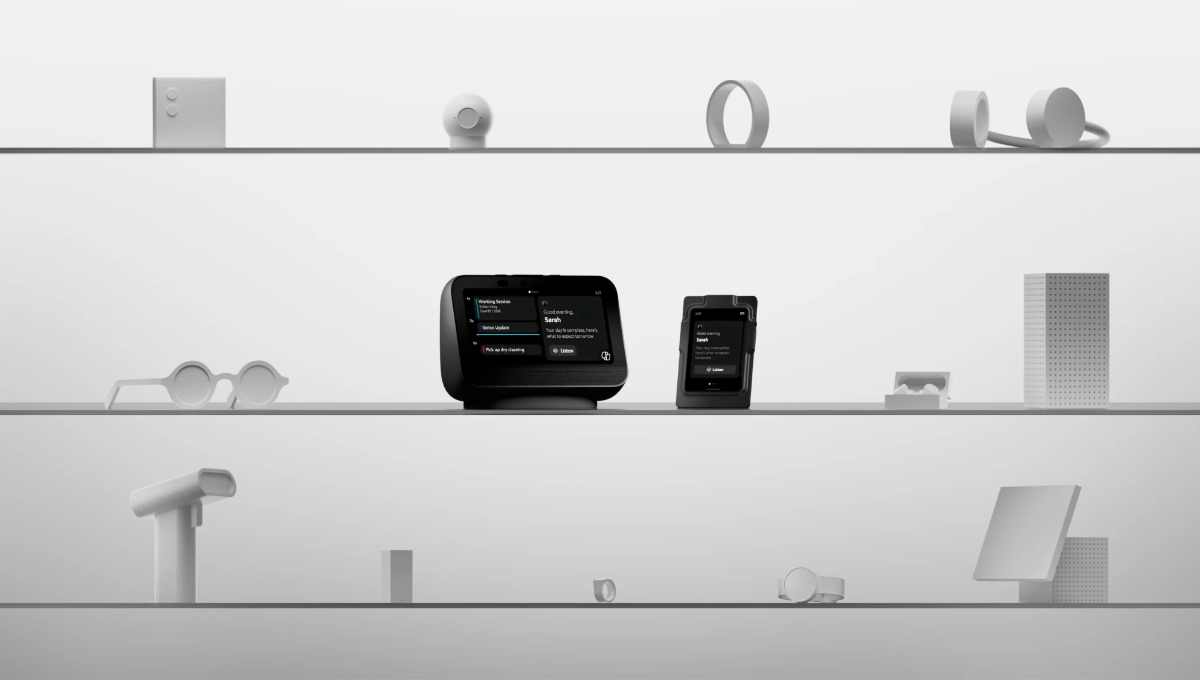
As part of the announcement, Microsoft showcased two prototype devices that demonstrate what the platform could enable.

The first is a desktop device that resembles a smart display. Equipped with a touchscreen, camera, microphones, and facial recognition capabilities, it is designed to sit on a desk and provide AI-powered assistance throughout the day. The concept is powered by MediaTek technology.
The second prototype is a wearable badge aimed at workplace environments. The compact device features a display, 5G connectivity, a camera, microphones, and a fingerprint scanner. Workers can use it for hands-free support, including transcribing conversations, accessing information, and performing quick actions with the press of a button. The wearable runs on Qualcomm silicon.
Microsoft noted that both devices are reference designs created to demonstrate the platform’s capabilities and are not currently available for purchase.
Several major companies have already expressed interest in exploring the technology. Organizations such as AccuWeather, Best Buy, CVS Health, Levi’s, and Target are expected to test Project Solara for potential use cases across retail, healthcare, and other industries.
The launch highlights Microsoft’s growing focus on AI-first hardware as the industry shifts toward agent-based computing. Rather than opening individual apps, future devices could rely on AI agents that handle tasks and interactions more directly for users.
Microsoft’s move also comes as competition in AI hardware continues to heat up. OpenAI, which acquired former Apple designer Jony Ive’s startup io in a $6.5 billion deal last year, is also preparing to enter the market. Earlier this year, OpenAI Chief Global Affairs Officer Chris Lehane said the company remains on track to introduce its first AI hardware product in the second half of 2026.
Also Read: Microsoft Plans New Copilot Capabilities Inspired by OpenClaw