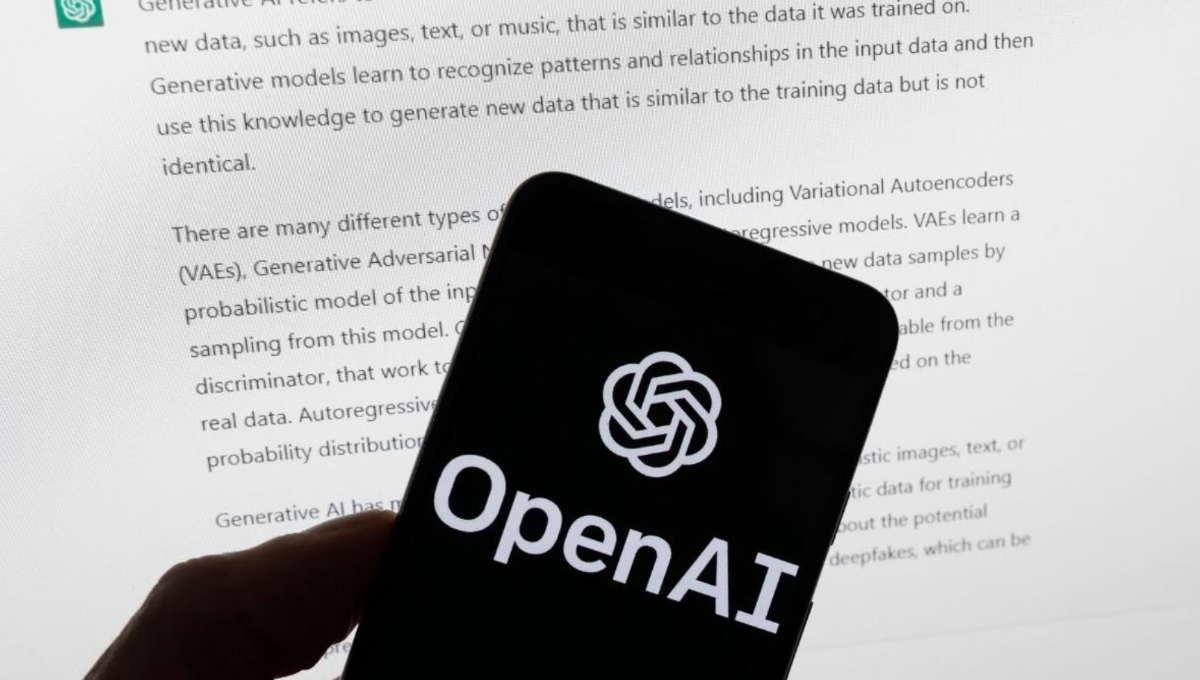
Frontier artificial intelligence models are advancing quickly, with new releases arriving one after another. OpenAI has now unveiled GPT-5.4, the company’s latest frontier model, which comes in different variants including GPT-5.4 Thinking and GPT-5.4 Pro. According to the company, this release represents a major step forward because it combines several of its recent technological improvements, such as stronger reasoning ability, better coding performance, and more advanced agent-style workflows, into a single system.
One of the notable upgrades is the model’s massive context capacity. GPT-5.4 can process up to a 1-million-token context window, allowing it to analyse extremely large inputs such as full software codebases or extensive collections of documents. OpenAI also says the model is the first in its main product line to include built-in computer-use capabilities. This means AI agents powered by GPT-5.4 can directly interact with software environments to complete tasks, verify results, and make corrections if needed.

In practical terms, the model can operate computers in a way that resembles human interaction. It can work with applications and websites by interpreting screenshots, using mouse clicks, and issuing keyboard commands. This ability makes it suitable for automating complex workflows that involve multiple digital tools.
The update introduces six major improvements across several areas. These include stronger coding capabilities, improved image understanding and multimodal processing, better handling of long-running tasks and multi-step agent workflows, higher token efficiency for tool-intensive workloads, more advanced agentic web search that gathers and synthesises information from multiple sources, and improved performance in document-heavy analytical tasks.
Another focus of the update is reliability. AI models are often criticised for “hallucinations,” where they generate inaccurate or misleading information. OpenAI claims GPT-5.4 reduces this problem, stating that the model is 33 percent less likely to produce false information compared with earlier versions. The system has also been designed with professional use cases in mind, showing strong performance in areas such as legal analysis, financial modelling, coding, and creating presentation materials. Developers can also build AI agents that plan tasks, execute them, and adapt if something goes wrong during the process.

The launch reflects how rapidly AI capabilities have evolved. Early versions of ChatGPT were mainly focused on answering questions. The GPT-4 generation expanded those abilities to writing essays, generating code, and summarising information. With GPT-5, models began demonstrating more advanced reasoning, and GPT-5.4 pushes this further by enabling AI to actually perform actions on computers.
In real-world scenarios, GPT-5.4 can integrate with productivity tools such as spreadsheets and documents that are widely used in offices. It can analyse financial datasets in Excel, automatically create dashboards, and generate reports from raw data. The model can also process lengthy legal contracts and documentation. For software development teams, it can write large codebases, debug programs, run automated tests, and even control web browsers through automation systems.
The release also comes amid growing competition in the AI industry. Rival companies are increasingly focusing on models capable of handling complex enterprise workloads. Anthropic, led by Dario Amodei, recently launched the Claude Opus 4.6 and Claude Sonnet 4.6 models, which are positioned as faster and more efficient for everyday professional tasks. While the latest models from different companies highlight varying strengths, they collectively point to a broader shift toward AI systems designed to function as practical digital workers in real-world environments.
Also Read: OpenAI Describes Layered Protections in U.S. Defense Department Agreement