Microsoft has introduced a new set of in-house AI models—MAI-Transcribe-1, MAI-Voice-1, and MAI-Image-2—expanding its growing lineup of tools aimed at developers and enterprise users.
The models are currently accessible through Microsoft Foundry and the MAI Playground, with availability limited to the US for now.

Speaking about the launch, Mustafa Suleyman, CEO of Microsoft AI, said the company is focused on building what it calls “Humanist AI.” According to him, the idea is to design systems that reflect how people naturally communicate, keeping real-world usability at the core.
Among the three, MAI-Transcribe-1 is designed for speech-to-text tasks and supports 25 languages. Microsoft claims it achieves a 3.9% word error rate on the FLEURS benchmark while processing batch transcription significantly faster—about 2.5 times quicker than its existing Azure solution.
MAI-Voice-1, on the other hand, focuses on voice generation. It can create custom voices using short audio samples and is capable of producing up to 60 seconds of audio in just one second. The model is built to handle longer speech outputs while maintaining the original speaker’s tone and identity.

For visual content, MAI-Image-2 handles image generation and is being integrated across products like Copilot, Bing, and PowerPoint. Microsoft says the model delivers at least double the speed of earlier versions, making it suitable for applications in marketing, design, and content creation.
In terms of pricing, MAI-Transcribe-1 starts at $0.36 per hour, MAI-Voice-1 costs $22 per one million characters, and MAI-Image-2 is priced at $5 per one million text tokens and $33 per one million image tokens.
The company also highlighted that these models come with built-in safeguards, governance features, and testing frameworks to support enterprise use.
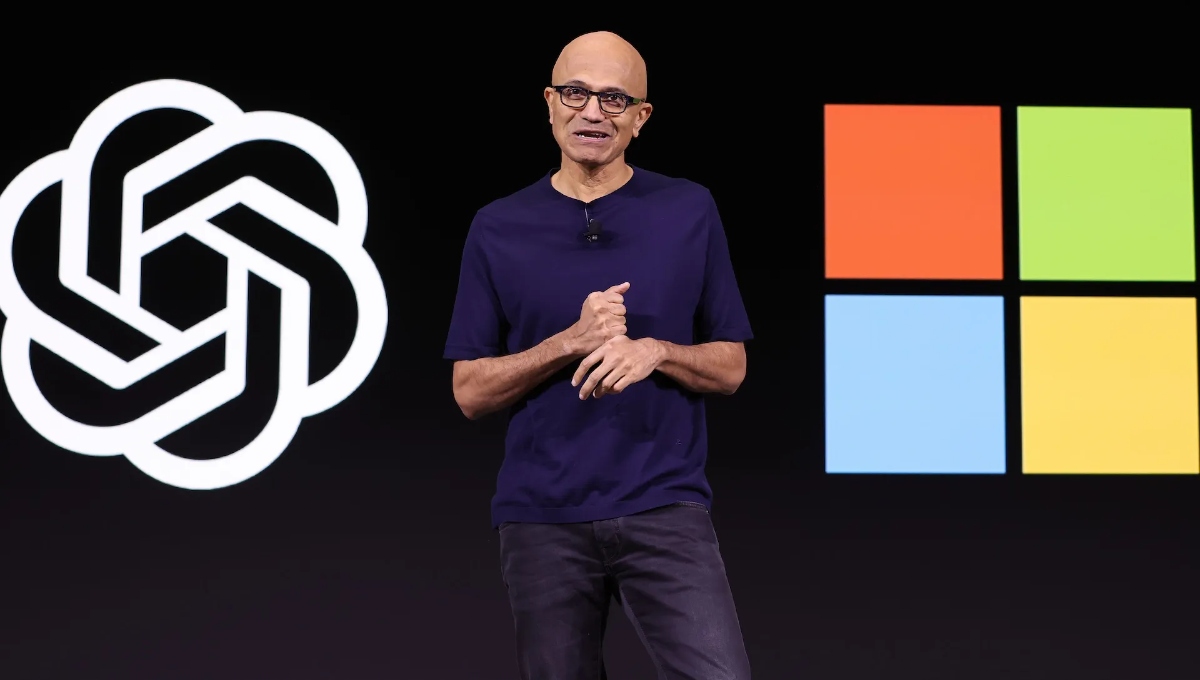
This launch comes at a time when Microsoft appears to be strengthening its own AI capabilities and gradually reducing its dependence on OpenAI’s foundation models. The shift follows growing tensions between the two companies, especially after OpenAI entered into multiple agreements with Amazon, including a partnership with Amazon Web Services as the exclusive third-party cloud provider for its enterprise platform, OpenAI Frontier.
Also Read: Microsoft Scales Back Copilot AI Features on Windows