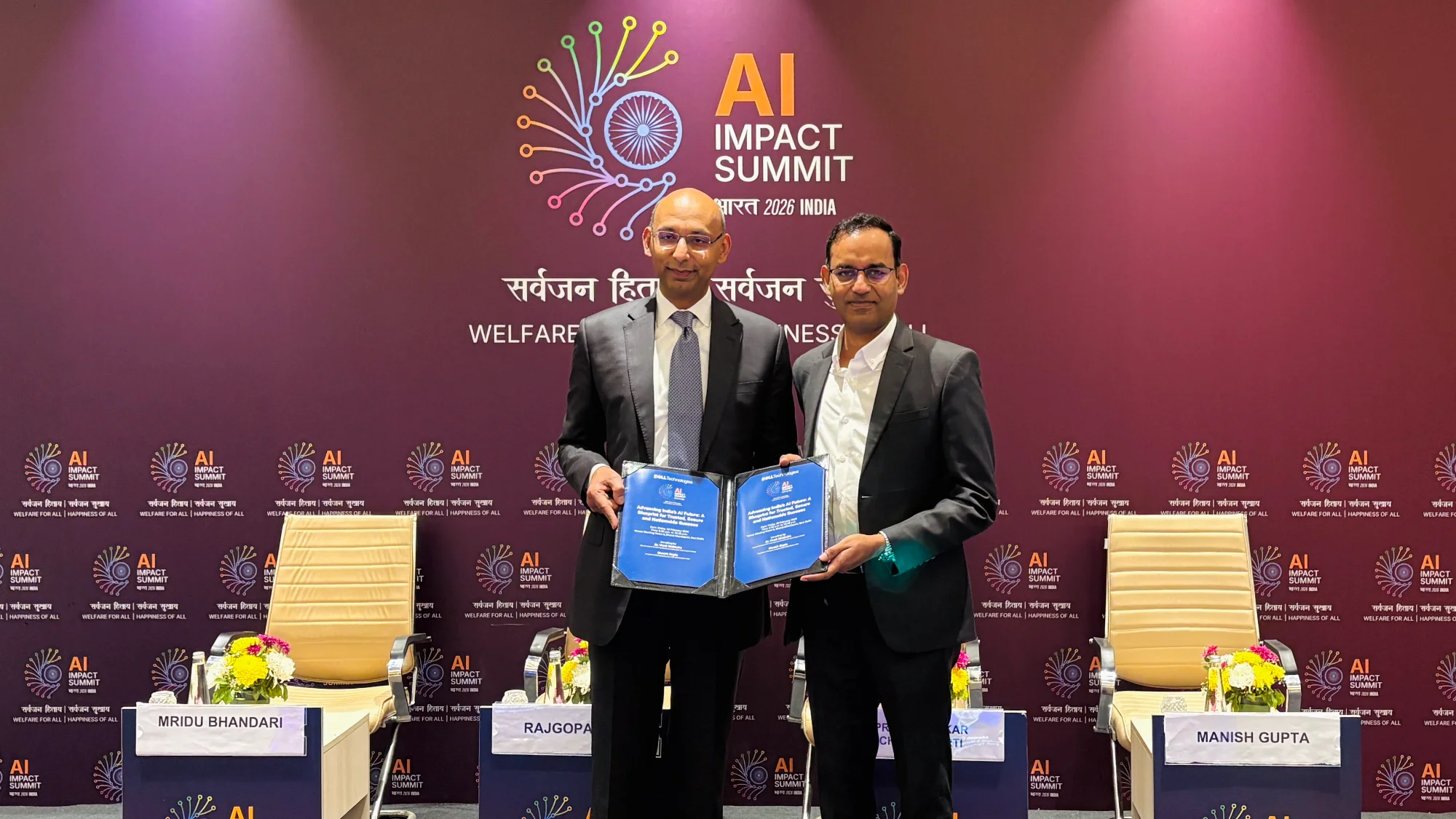
India’s push to scale artificial intelligence is gathering momentum, and the private sector wants a bigger role in shaping what comes next. On February 20, Dell Technologies introduced its “AI India Blueprint” at the India AI Impact Summit 2026, outlining how the country can move from scattered AI pilots to nationwide, production-ready systems.
The document, titled “Advancing India’s AI Future: A Blueprint for Trusted, Secure and Nationwide Success,” is designed to complement government efforts such as the IndiaAI Mission and the Digital Personal Data Protection Act. At its core, the message is straightforward: AI should be treated as critical national infrastructure, not just another enterprise technology upgrade.

The blueprint points to the scale of change ahead. AI workloads in India are expected to grow at around 30% annually through 2030. At the same time, national compute demand could touch 12–15 exaFLOPS by the end of the decade. That expansion will not be without pressure. Data centres alone may account for up to 8% of India’s electricity use by 2030, making power planning and sustainability central to the AI conversation.
To address this, the roadmap is built around three focus areas — investment, innovation and governance. On infrastructure, it calls for expanding sovereign AI compute capacity and developing energy-efficient data centres. It proposes a national compute strategy with clear capacity goals and regional deployment aligned with innovation hubs. The framework also stresses equitable access to compute resources for startups, research institutions, MSMEs and public bodies, while linking infrastructure growth to domestic manufacturing and supply chain resilience.
Talent development forms the second pillar. With India projected to need nearly one million AI professionals by 2030, the blueprint suggests integrating AI literacy into mainstream education, expanding Centres of Excellence beyond major metros and establishing AI-focused training within civil services. It also encourages applied research through open and collaborative AI ecosystems.

The third area centres on governance and security. The document supports a principles-based, sector-led regulatory approach, alongside clearer operational guidance for organisations deploying AI. It recommends stronger cybersecurity standards, wider adoption of Zero Trust architectures and safeguards against threats such as data poisoning, adversarial attacks and model misuse.
Company leaders said the blueprint reflects their view that public-private collaboration will be key to building a secure and inclusive AI ecosystem. They added that Dell plans to back India’s AI growth through infrastructure, partnerships and enterprise deployments as demand for compute continues to rise.
As India works to translate its AI ambitions into real-world systems, the roadmap attempts to bridge policy intent with practical execution — focusing on infrastructure, skills and safeguards that can support long-term growth.
Also Read: OpenClaw’s AI Assistants Are Building a Social Network of Their Own