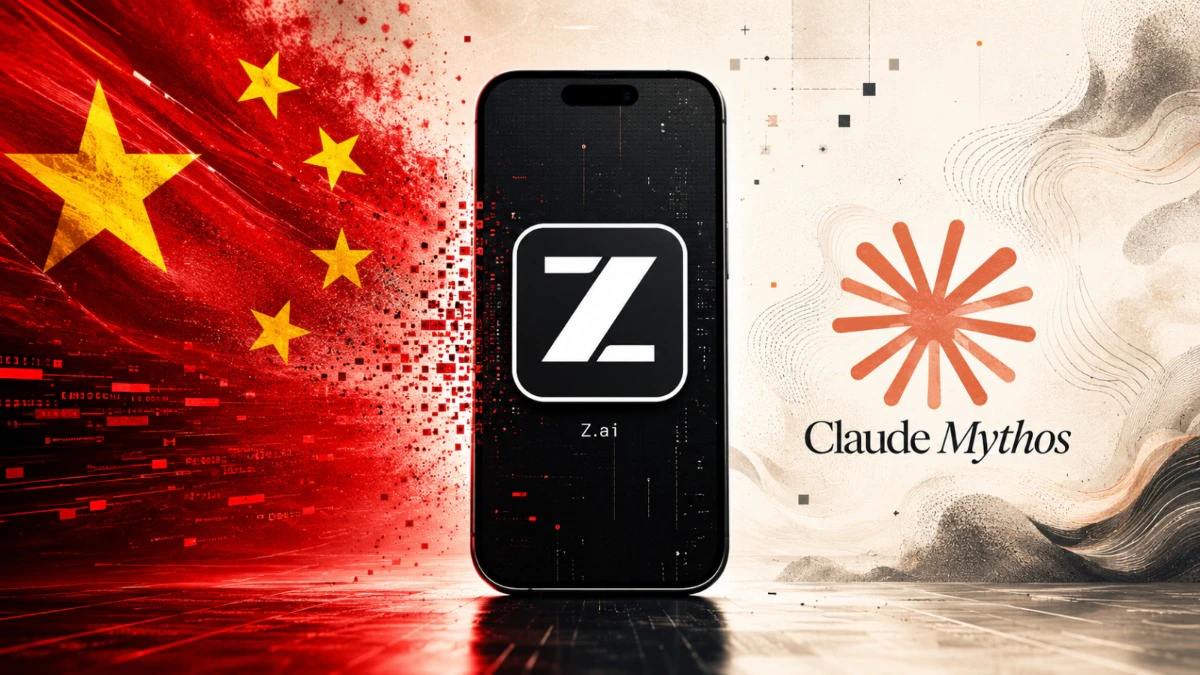
The race to build the world’s most advanced AI models is heating up.
A brief exchange on X this week sparked fresh debate over how quickly Chinese AI companies are catching up with their US rivals.
Jie Tang, founder of Chinese AI startup Z.ai, believes the gap may close sooner than many expect. His comments came after Elon Musk suggested that Chinese large language models could reach the level of Anthropic’s Claude Fable 5 by early 2027.
The discussion started when an X user asked how long it would take Chinese AI systems to achieve “Fable-class” performance. The user pointed to Z.ai’s newly released GLM-5.2 model, arguing that it has already moved much closer to the industry’s leading AI systems.
Based on that progress, the user estimated that Chinese AI could reach the next frontier of capabilities by the end of 2026.
Musk replied that such a milestone was “possibly” achievable in the first quarter of 2027.
Tang quickly disagreed.
“It won’t take that long,” he wrote, signaling confidence in the pace of AI development happening inside China.
The conversation comes just days after Anthropic introduced Claude Fable 5 and Claude Mythos 5. The two models are designed for advanced coding, reasoning, scientific work, and autonomous AI tasks. Their launch attracted significant attention across the industry, especially after new US export controls reportedly limited access in several international markets.
Not long afterward, Z.ai unveiled GLM-5.2, its latest flagship AI model.
The company says the model was built for demanding software engineering projects, complex coding tasks, and AI agent workflows that require sustained reasoning over long periods. It can reportedly process up to one million tokens of context, allowing it to work with large volumes of information in a single session.
Unlike traditional chat-focused systems, GLM-5.2 is aimed at tasks that involve planning, decision-making, and execution across multiple steps. Z.ai says the model includes several reasoning modes designed to improve performance on complicated engineering problems.
The launch has drawn attention because it highlights how rapidly Chinese AI companies are advancing.
According to benchmark results released by the company, GLM-5.2 delivers strong performance in coding and software engineering evaluations. Z.ai claims the model competes closely with some of the most capable AI systems currently available.
Founded by computer scientist Jie Tang, Z.ai is one of China’s best-known AI startups. The company was previously called Zhipu AI before adopting the Z.ai brand for its global operations in 2025.
In recent years, the startup has invested heavily in open-source AI development and autonomous agent technology. Its model releases have arrived in quick succession, with GLM-5 launching earlier this year and GLM-5.1 following soon after.
The arrival of GLM-5.2 adds another chapter to the growing competition between Chinese and American AI developers, a race that many believe is accelerating faster than expected.
Also Read: China’s ByteDance Launches Doubao 2.0 for the ‘Agent Era’