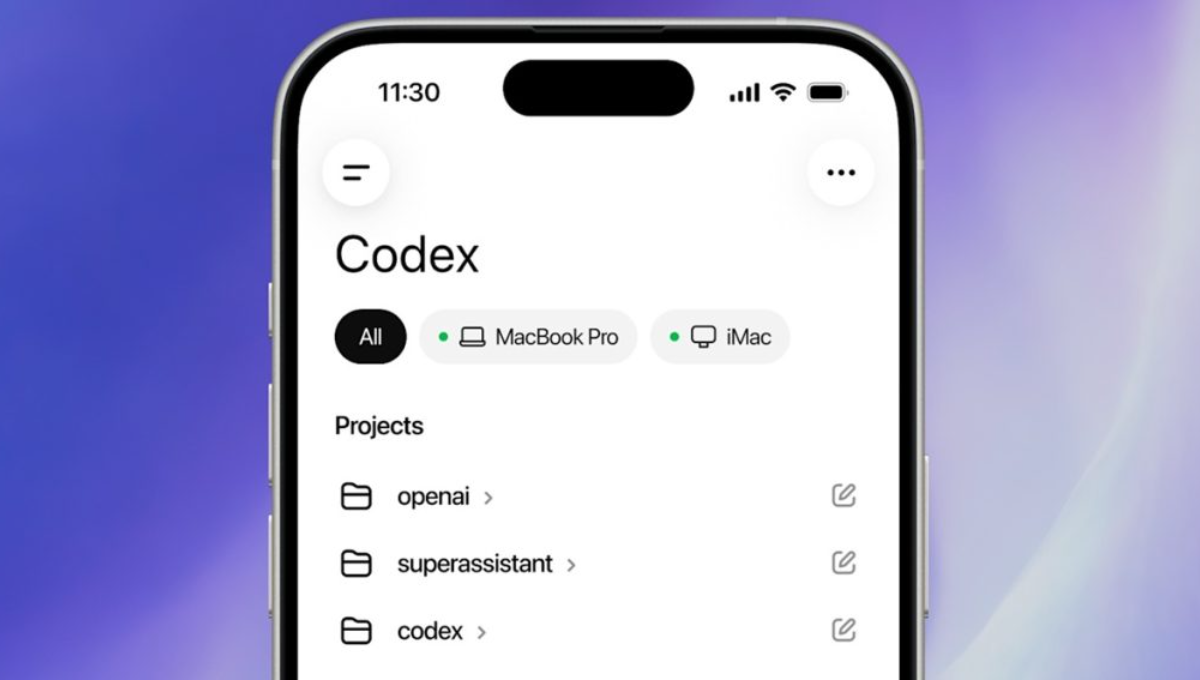
OpenAI is bringing its Codex coding assistant closer to users by adding mobile support inside the ChatGPT app. The update allows developers to keep track of coding tasks, approve actions, and review work directly from their phones, even when they are away from their computers.
The feature is rolling out in preview on both iOS and Android and is available for all ChatGPT users, including Free and Go plans. Support for connecting with the Windows Codex app is expected to arrive later.

OpenAI said Codex has already gained strong adoption, with more than four million people now using the coding assistant every week.
The new mobile integration is designed to help users stay connected to ongoing coding work from anywhere. Through the ChatGPT app, people can review outputs, respond to prompts, approve commands, or change instructions while Codex continues running tasks on connected devices.
According to the company, the mobile experience shows the live status of whichever machine Codex is connected to, including laptops, Mac minis, or remote development systems. Users can check screenshots, terminal activity, test results, project threads, approvals, plugins, and code changes in real time.

OpenAI said the system is built to support more than simple remote control. Users can move between different coding threads, switch models, continue unfinished tasks, or start entirely new projects from their phones without interrupting ongoing work.
To keep connections secure, Codex uses a relay-based infrastructure that allows trusted machines to stay reachable without exposing them directly to the public internet. The company added that project context and session data are automatically synced across authorised ChatGPT devices.
OpenAI also shared a few examples of how the feature could be used in daily workflows. Developers can investigate software bugs while travelling, review code updates during commutes, prepare summaries before meetings, or launch new coding jobs while away from their desks.
In one example, the company said users can ask Codex to inspect files, reproduce browser issues, run tests, and work on fixes while they are not actively using their computers.
At the same time, OpenAI announced that Remote SSH support is now generally available. This allows Codex to connect directly to managed remote environments using SSH configurations already available on desktop systems.
The company said the same secure relay infrastructure makes it possible to start work on a desktop device and continue monitoring or managing it later through mobile devices linked to the same ChatGPT account.
OpenAI has also introduced programmatic access tokens for enterprise and business customers. These tokens can support CI pipelines, release workflows, and internal automation systems.
Another feature now available across all plans is Hooks, which can be used to scan prompts for secrets, run validation checks, log conversations, create memory actions, or customise Codex behaviour for different repositories.
In addition, OpenAI announced support for HIPAA-compliant Codex usage in local environments for eligible ChatGPT Enterprise customers. The company said the feature is aimed at helping healthcare organisations manage patient-care and operational workflows more securely.
Also Read: OpenAI Unveils GPT-5.4 Mini and Nano